Refractive index retrieving of polarization maintaining optical fibers
One of the features of PM optical fibers is their symmetry around only two orthogonal axes perpendicular to the fiber central axis, which are known as slow axis and fast axis. When polarized
POLARIZATION MAINTAINING FIBERS AND THEIR APPLICATIONS
These create two orthogonal axes of refractive index within the fiber—the fast axis (perpendicular to SAP) or the slow axis (parallel to SAP). These axes correspond to two orthogonal polarization states
Polarization-Maintaining Fibers Explained
The two axes in a PM fiber are sometimes called the "slow axis" and the "fast axis," because they have different indices of refraction. This means that light waves in the two polarization
What is PM Fiber? Polarization Maintaining Fiber Explained
Learn what Polarization Maintaining Fiber (PMF) is, how it works, and its applications. Explore fast/slow axis, beat length, extinction ratio, and types of PMF.
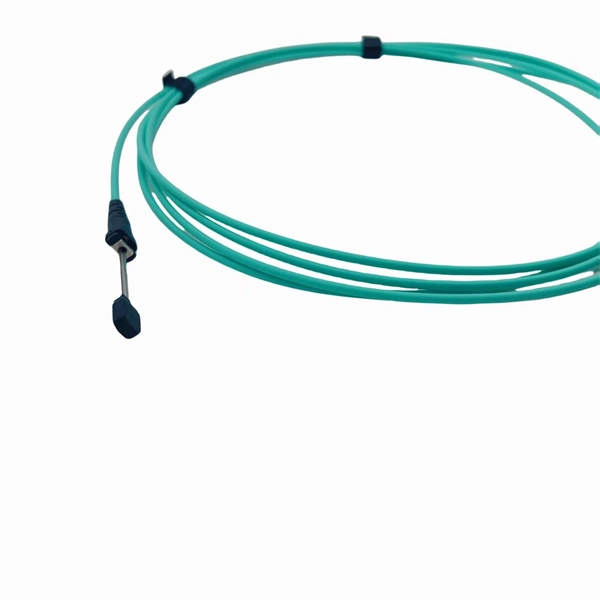
How Does Polarization-maintaining Fiber Keep Polarization-maintaining
Polarization-maintaining fibers form fast and slow orthogonal axes due to the strong birefringence of the core, and light polarized along the fast axis has a smaller refractive index than light polarized along
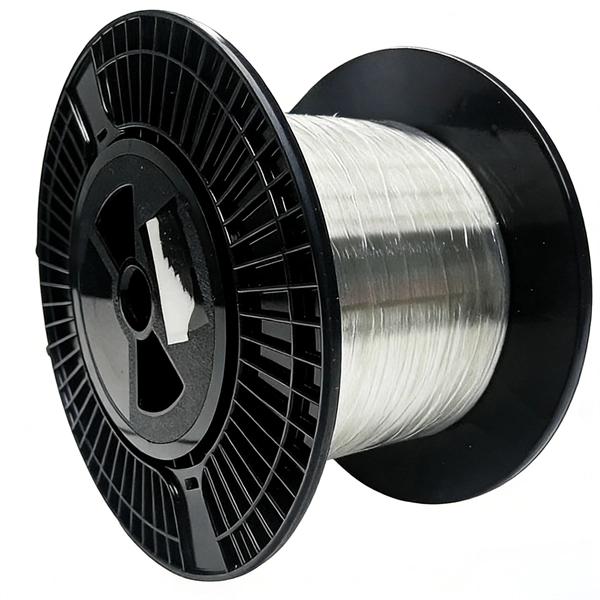
Polarization-maintaining fibers
In polarization-maintaining single-mode fibers (PM fibers), the fiber symmetry is broken by integrating stress elements in the fiber cladding. The light is then guided in two perpendicular principle states of

A Detailed Analysis of Polarization-Maintaining Fiber
**Difference from Ordinary Fiber**: Ordinary fiber causes polarization state perturbations due to random birefringence, while polarization-maintaining fiber, by design, has a fixed birefringence
POLARIZATION MAINTAINING FIBERS AND THEIR
These create two orthogonal axes of refractive index within the fiber—the fast axis (perpendicular to SAP) or the slow axis (parallel to SAP).
How Does Polarization-maintaining Fiber Keep
Polarization-maintaining fibers form fast and slow orthogonal axes due to the strong birefringence of the core, and light polarized along the fast axis has a smaller
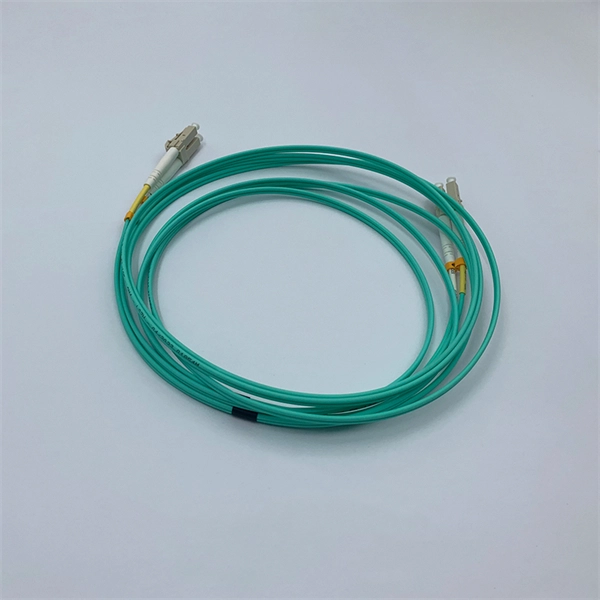
Polarization Maintaining Fiber (PM)
Intentional Birefringence for Polarization Preservation: PM fiber deliberately creates a large, uniform difference in refractive indices along two perpendicular axes (fast and slow), allowing it to propagate
Polarization-maintaining optical fiber
Polarization-maintaining fibers work by intentionally introducing a systematic linear birefringence in the fiber, so that there are two well defined polarization modes which propagate along the fiber with very
What''s the Fast and Slow Axis?How to Align the PM Fiber?
Polarization Maintaining fibers work by inducing a difference in the speed of light in the two perpendicular polarizations passing through the fiber. This birefringence creates two major
Optical Power Meters & Sources
High-precision power meters (Ge/InGaAs) and stabilized light sources for insertion loss and return loss testing.
OTDR & Fiber Characterization
Full-featured OTDR, fiber OTDR testers, and modular OTDR test modules for network deployment and troubleshooting.
OSA & Eye Diagram Analyzer
High-resolution OSA for DWDM and eye diagram testers for signal integrity validation.
BERT & Endface Inspection
BERT up to 800G, fiber endface inspection probes, and extinction ratio meters for comprehensive testing.